
How Often Should a Chimney Be Inspected?
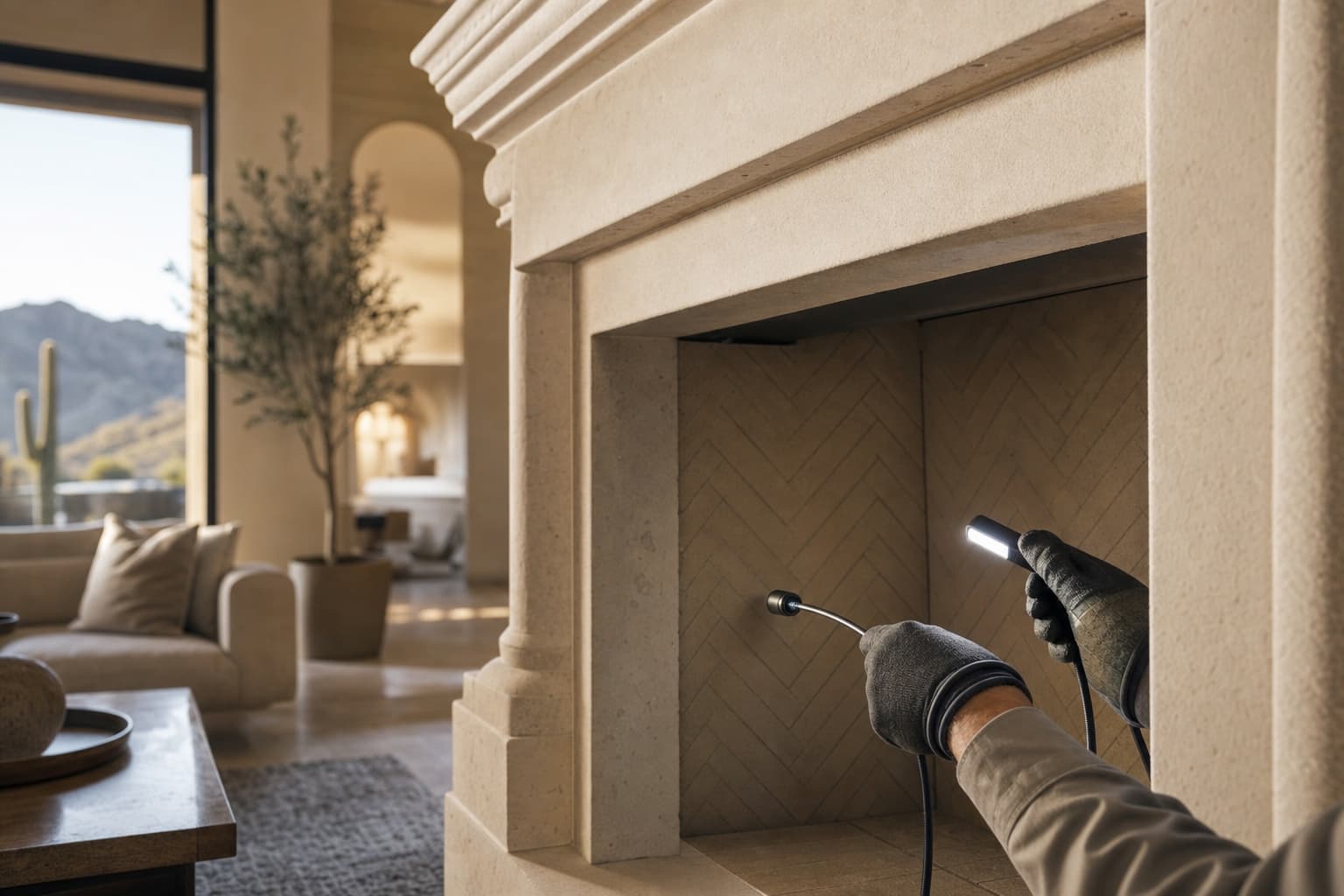
The widely used industry guideline is simple: any chimney that gets used should be looked at once a year. In practice, the moments that matter most are before the first fire of the season, after buying a home, and after any water intrusion near the chimney.
Why annual, even in Arizona?
Arizona fireplaces work a short season, so it's tempting to assume they need less attention. But most chimney deterioration here doesn't come from burning — it comes from weather. Intense UV, daily temperature swings and monsoon rain work on the crown, mortar and cap all year, whether or not you ever light a fire.
An annual look catches the cheap problems — a hairline crown crack, a rusting cap, a mortar joint starting to open — before water turns them into expensive ones.
Situations that call for an inspection now
Buying a home: a general home inspection usually stops at what's visible from the hearth. A chimney-specific inspection evaluates the venting system itself and is one of the most cost-effective checks a buyer can order.
After a leak: if water has appeared on a ceiling or wall near the chimney, the chimney's exterior components are the first suspects.
After years of non-use: dormant flues collect dust, debris and sometimes nests. An inspection confirms the system is clear and sound before the first fire.
When something seems off: odors, poor draft, debris in the firebox, or staining on the exterior masonry are all reasons to have it looked at promptly.
What an inspection actually covers
A proper inspection evaluates the firebox, damper and accessible flue from the inside, and the masonry, crown, cap and flashing from the outside. The outcome should be a plain-language explanation of the system's condition and honest priorities: what's urgent, what can wait, and what's fine.