
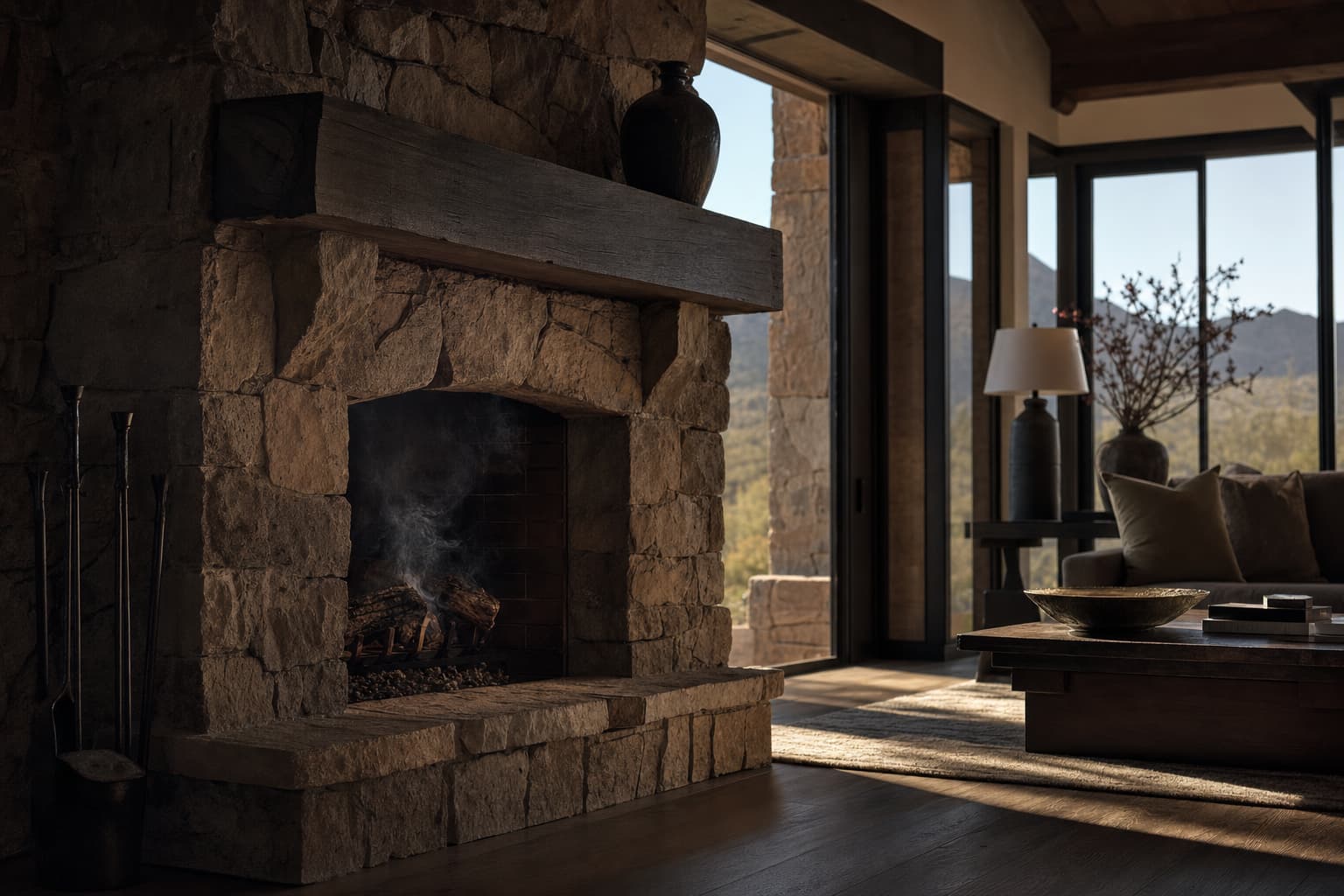
Why Do Fireplaces Smoke Into the Room?
Smoke follows draft, and draft depends on the whole system: a clear flue, a working damper, correct flue sizing for the firebox opening, and air pressure inside the house. When any of these is off — an obstruction, a damper stuck half-closed, a flue that never warms up, or a kitchen exhaust fan pulling air down the chimney — smoke takes the easiest path, which is into your room.
When Do You Need It?
Call us if smoke enters the room when you light a fire, if the smell lingers long after the fire is out, or if the fireplace has always been 'the one we don't use because it smokes.' These systems can almost always be improved once the real cause is identified.
Common Warning Signs
- Smoke rolls out of the fireplace opening when burning
- Persistent smoky odor even without a fire
- Fires that need the door or a window cracked to behave
- Soot staining on the face of the fireplace above the opening
What Our Service Includes
- Systematic diagnosis of the draft problem
- Flue, damper and smoke chamber evaluation
- Identification of airflow and pressure issues in the home
- Correction options explained with honest trade-offs
- The fix, once you approve it — nothing before
Smoke Problems Questions
Is a smoking fireplace dangerous?
Smoke entering the living space is a sign the venting system isn't doing its job and shouldn't be ignored. Stop using the fireplace until the cause is identified — diagnosis is straightforward for a professional.
Can smoke problems in older fireplaces be fixed?
Almost always improved and usually fully corrected. The key is diagnosing the actual cause — obstruction, damper, flue sizing or house airflow — because each one has a different remedy.