
Monsoon Season and Chimney Water Intrusion
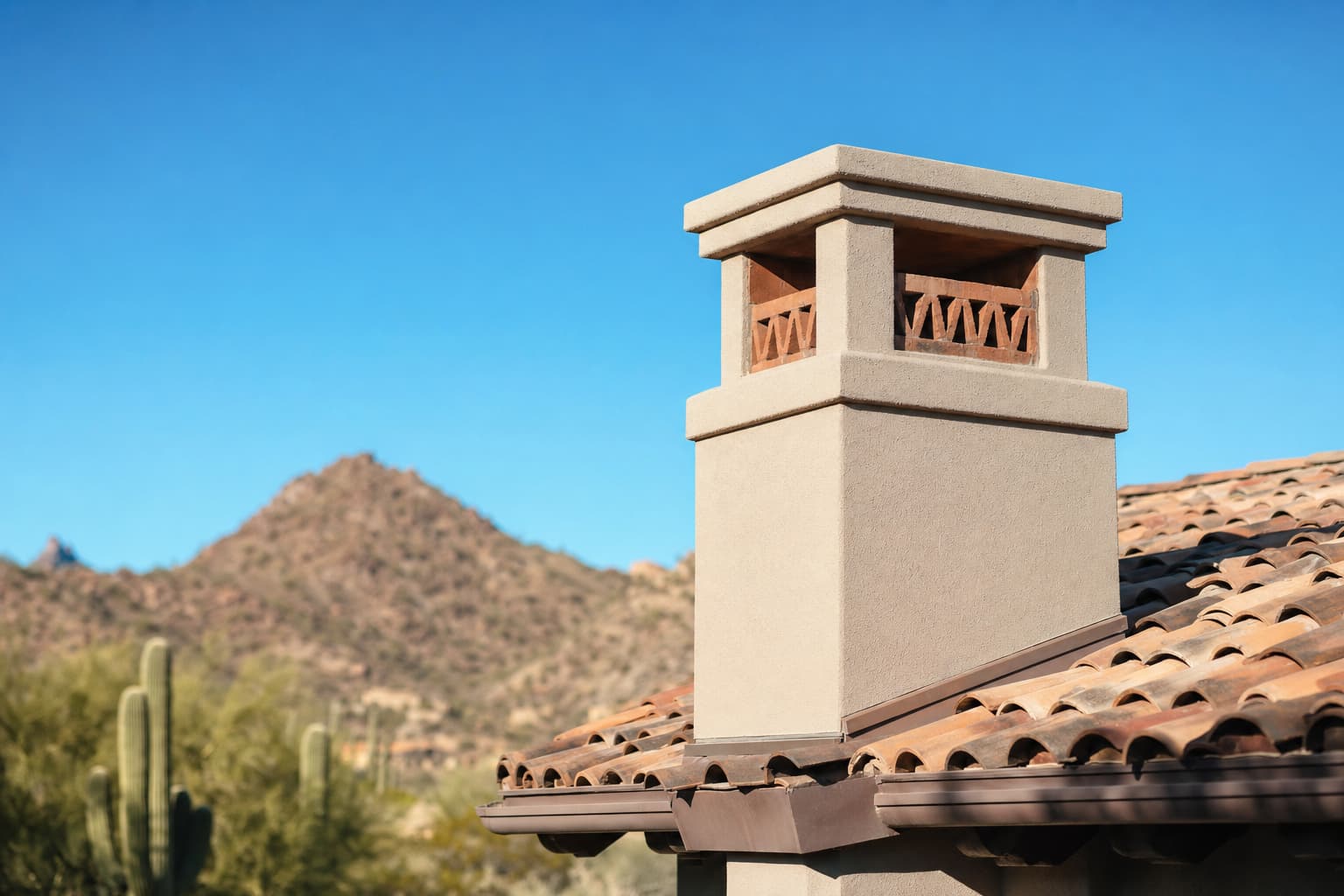
Most Arizona chimney leaks trace back to three components: a cracked crown, a missing or failed cap, or deteriorated masonry joints. Monsoon storms don't create these weaknesses — months of sun and heat do. The storms just find them.
How the desert sets up the leak
A chimney crown — the concrete surface at the top — spends all year in direct sun, expanding and contracting through large daily temperature swings. Over time this opens hairline cracks. Mortar joints age the same way. None of it matters much in May. It matters enormously during the first driving July storm.
Monsoon rain is wind-driven, which means it hits chimney surfaces that gentle rain never touches. Water enters through crown cracks, open joints, or an uncapped flue, then shows up somewhere confusing — a ceiling stain several feet from the chimney, a musty smell in the firebox, rust on the damper.
Signs water is getting in
Water stains or bubbling paint on ceilings or walls near the chimney. White powdery staining (efflorescence) on exterior brick. A damp or metallic smell from the firebox after storms. Rust on the damper or firebox. Bits of masonry appearing in the firebox.
Any of these deserves attention promptly — moisture damage compounds, and the entry point is usually inexpensive to fix compared to what continued intrusion costs.
Before and after the season
Before monsoon season, the highest-value checks are the crown, the cap and visible mortar joints. After the season, look at ceilings near the chimney and inside the firebox for the signs above. If anything looks off, a professional evaluation identifies the entry point rather than guessing at it.