
Understanding Chimney Caps: What They Do and Why They Matter
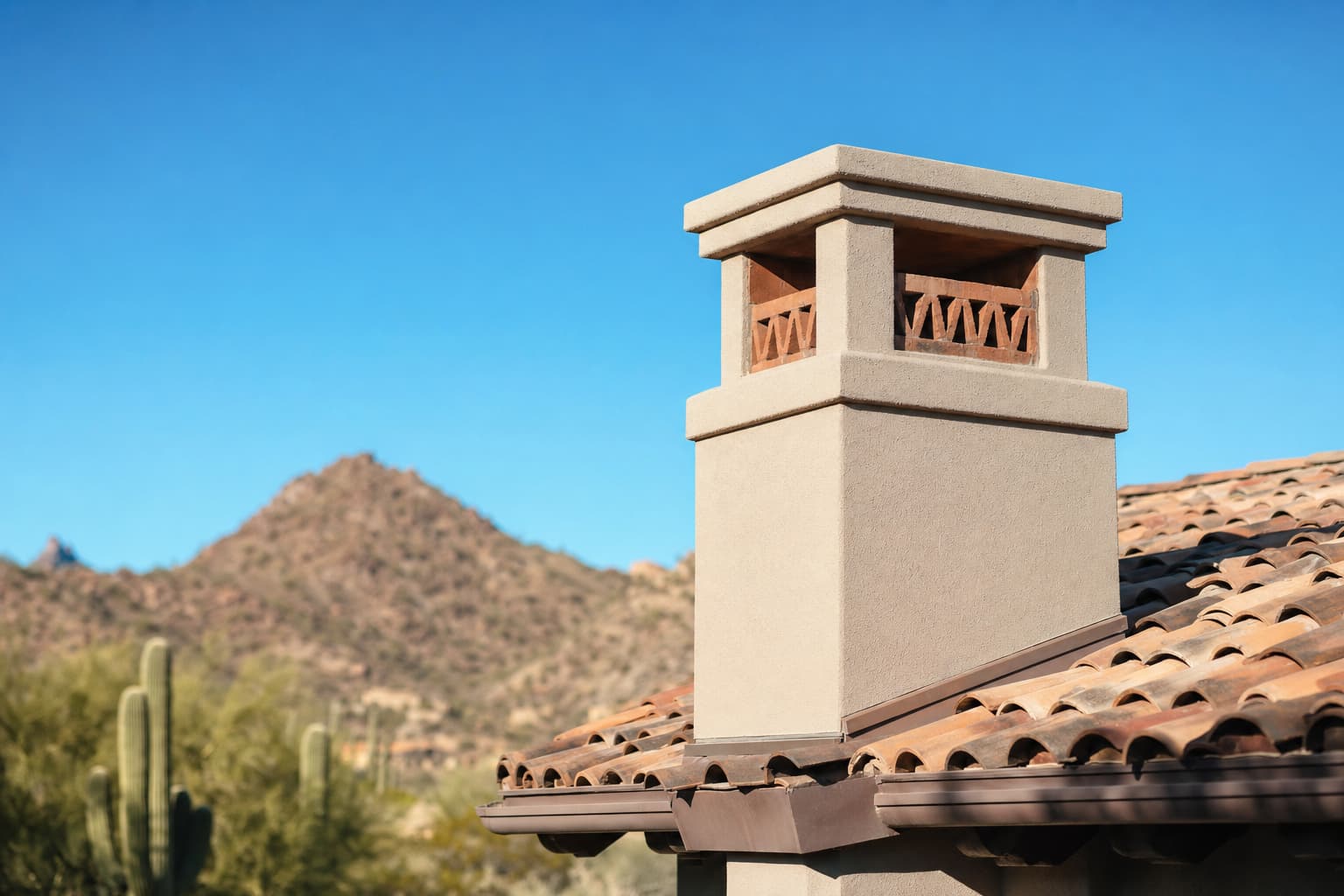
A chimney cap is the cover at the top of the flue. It keeps rain, birds, animals and debris out while letting smoke and gases exit. It is the least expensive component on a chimney and prevents several of the most expensive problems a chimney can have.
What happens without a cap
An open flue takes in whatever arrives: monsoon rain straight down the chimney, birds looking for a protected nesting cavity every spring, windblown debris. Rain rusts the damper and deteriorates the flue interior; nests block the chimney and add flammable material exactly where it shouldn't be; debris accumulates until draft suffers.
What a good cap looks like
A quality cap is sized to the flue, secured properly, made of a material that survives outdoors — stainless steel is the common choice — and includes mesh screening. The screening is what keeps birds and animals out; the hood is what keeps rain out. In Arizona, the screening matters most in spring and the hood earns its keep every July.
Cap vs. crown — not the same thing
The cap covers the flue opening; the crown is the concrete surface that tops the chimney structure itself and sheds water away from the masonry. They fail differently and are repaired differently. A missing cap lets water into the flue; a cracked crown lets water into the chimney structure. Both are worth checking annually, and both are far cheaper to address than the water damage they prevent.