
Why Does My Gas Fireplace Pilot Keep Going Out?
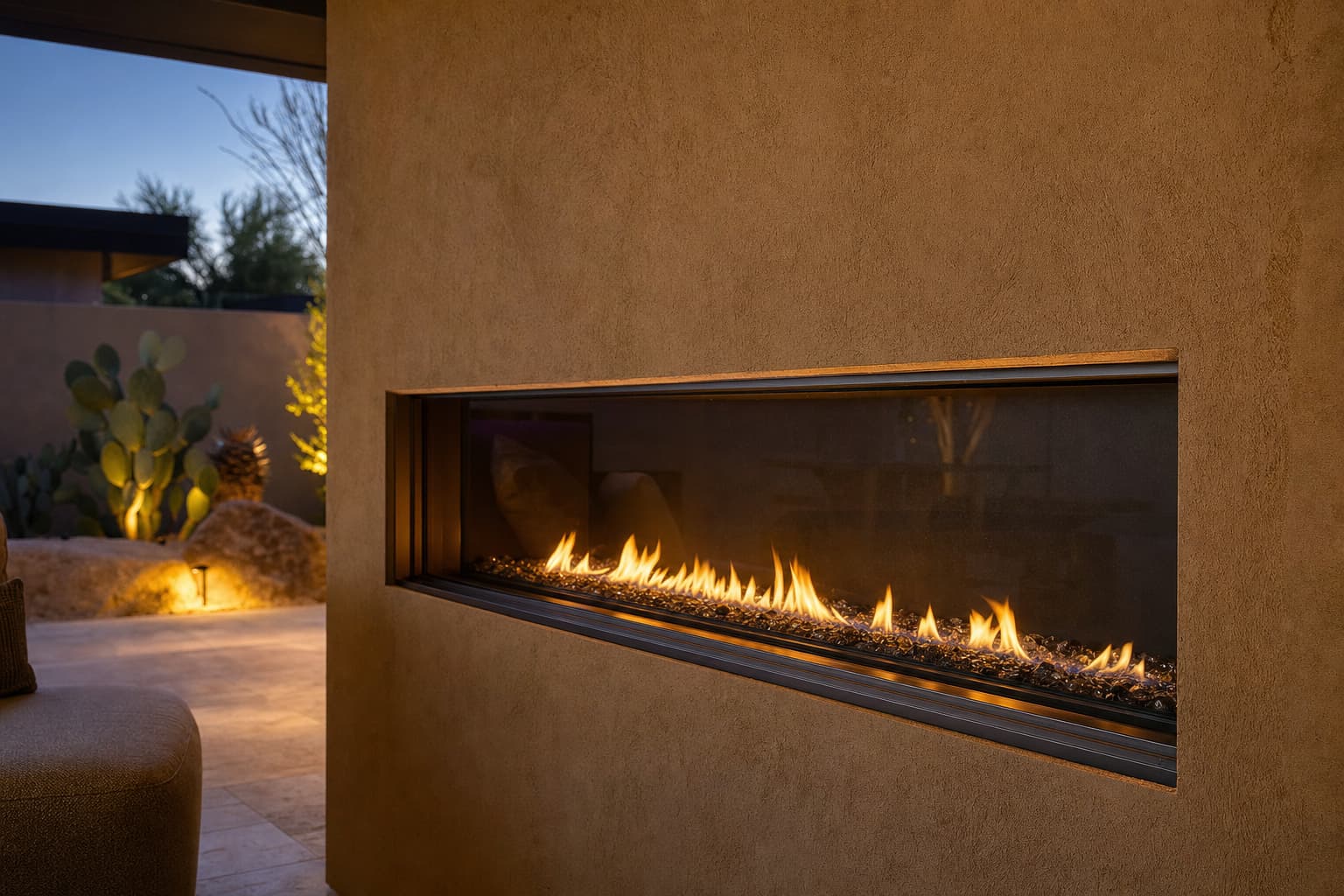
A pilot that lights but won't stay lit is most often a flame-sensing component (commonly a thermocouple or thermopile) nearing the end of its life, a weak or misdirected pilot flame that isn't heating that sensor properly, or — less often — drafts and venting effects blowing the flame around. It's one of the most routine gas fireplace service calls there is.
How the safety loop works
Gas fireplaces only allow gas to flow while a sensor confirms a flame is present to burn it. The pilot flame heats that sensor; the sensor holds the gas valve open. When the sensor weakens with age, or the pilot flame shrinks or drifts off-target, the system reads 'no flame' and shuts the gas off. Annoying — but it's the safety system working exactly as designed.
Why this happens after summer
In Arizona, fireplaces sit unused for eight months while dust settles on the pilot assembly. A dusty pilot burns smaller and cooler, sometimes just enough to stop satisfying the sensor. The first cold week of the season is when we hear about it — the fix is typically cleaning and adjustment or replacing the worn sensing component.
What not to do
Don't bypass, wedge, or 'help' any safety component, and don't repeatedly relight a pilot that keeps dropping out without finding out why. Gas diagnosis is quick and inexpensive for a technician who does it weekly. If you smell gas at any point, stop, ventilate, and call your gas utility first.