
Why a Gas Fireplace Won't Ignite
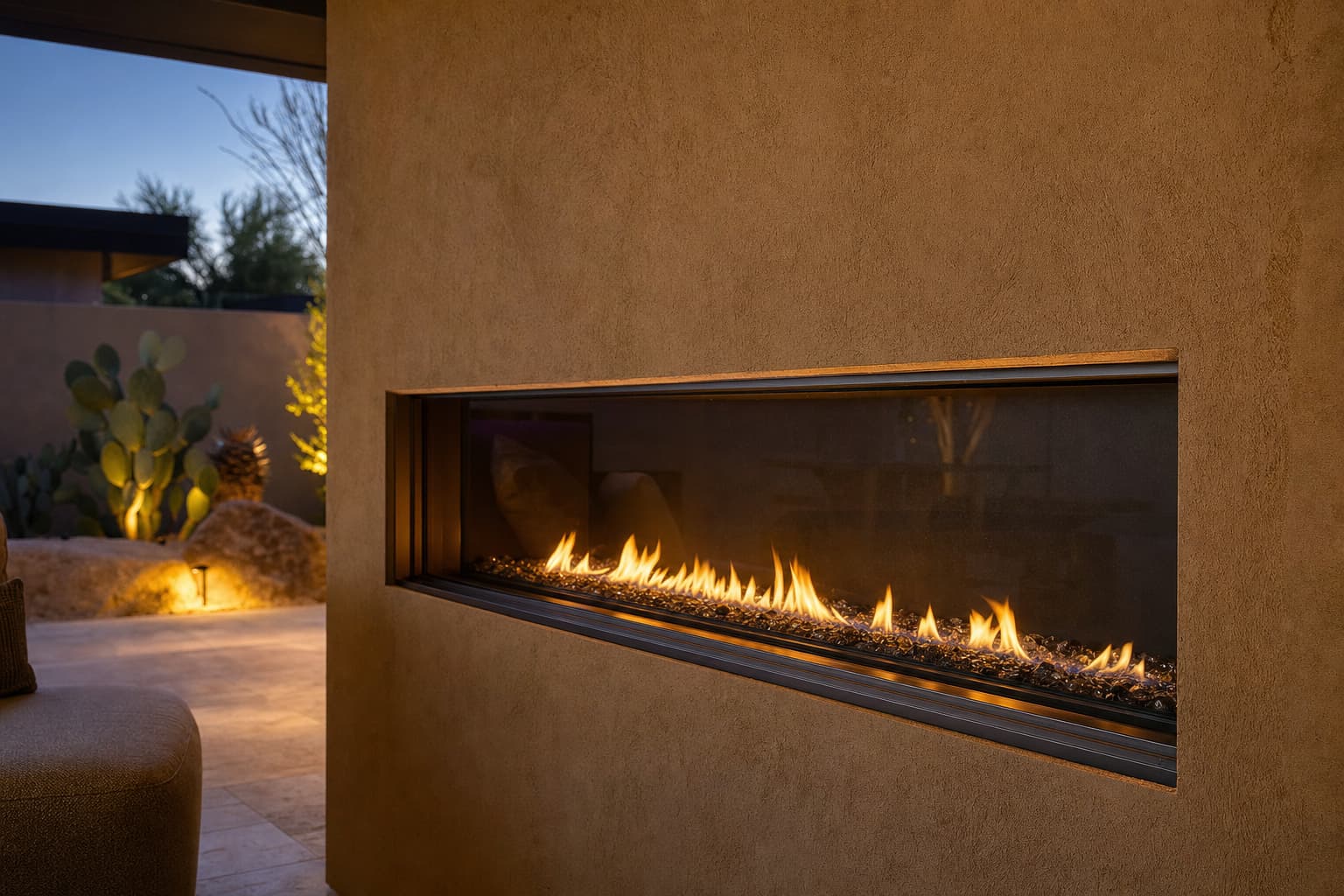
When a gas fireplace won't light, the usual suspects are the ignition system: a pilot that has gone out or won't stay lit, a worn ignition component, dust on the burner assembly after months of non-use, or a safety device doing exactly what it's designed to do.
The most common causes
Pilot and ignition wear: pilot assemblies and ignition components are the hardest-working parts of a gas fireplace, and they drift or fail with age. A pilot that lights but won't stay lit typically points to a sensing component nearing end of life.
Dust and debris: Arizona fireplaces sit unused for most of the year, and dust settles on the burner and pilot assembly. That alone can prevent clean ignition after the summer.
Safety devices: gas fireplaces are built to shut themselves down when something is off. A unit that refuses to light may be protecting you — which is why bypassing anything is never the answer.
What's reasonable to check yourself
Confirm the gas supply is on, wall switch or remote batteries are good, and any breaker or outlet the unit uses has power. Those checks are safe and solve a surprising share of no-light calls.
What's not reasonable: opening the valve compartment, adjusting gas components, or working around a safety lockout. Gas work belongs to people who do it every week.
When to call a professional
If the basics check out and the unit still won't light — or lights inconsistently, or the pilot keeps dropping out — a service visit is quick for a technician familiar with these systems. Annual service prevents most of these calls entirely: the burner gets cleaned, ignition parts get checked, and small wear gets corrected before the first cold night reveals it.