
Preparing Your Fireplace for Arizona Winter
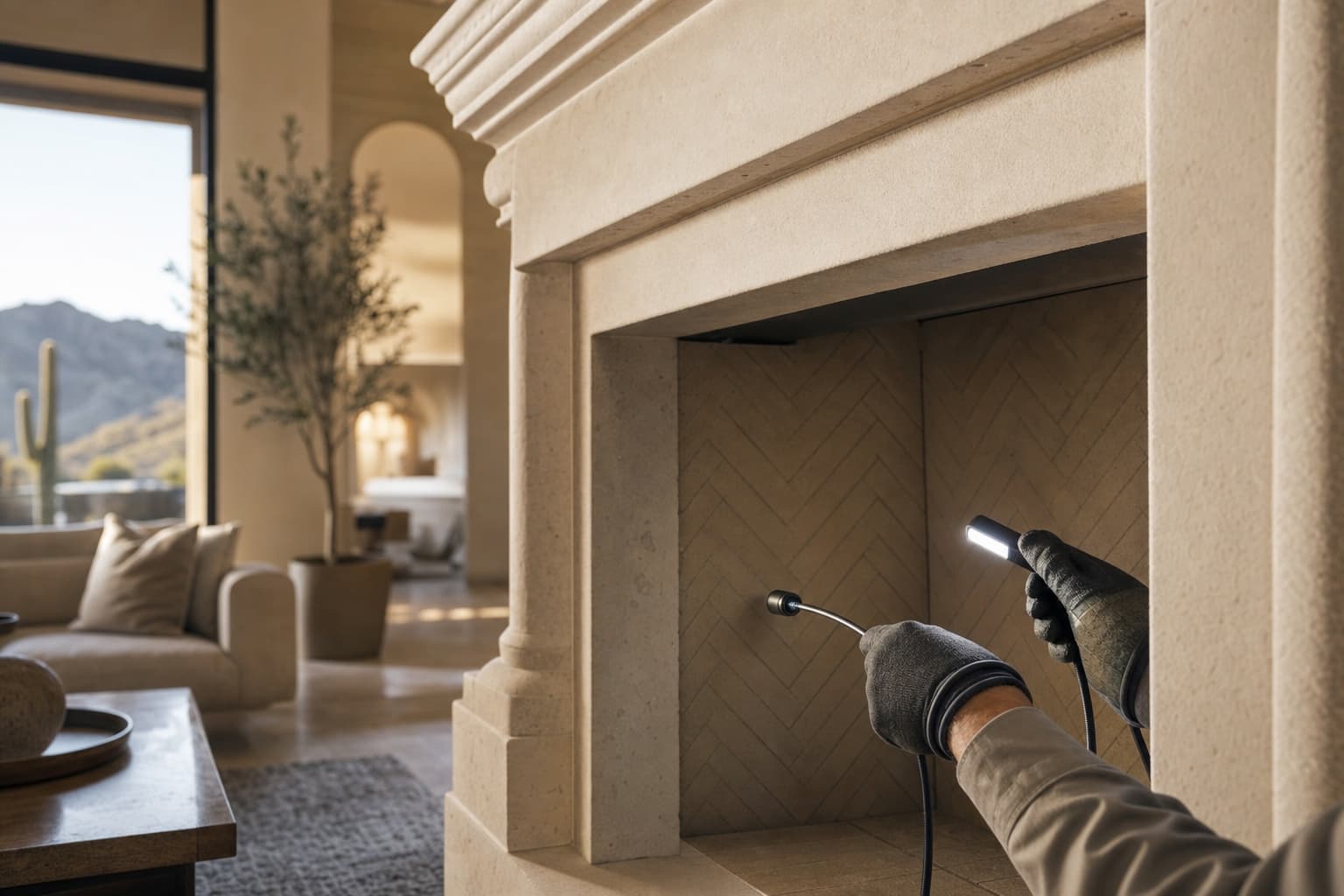
Arizona fireplaces have an unusual life: eight or more months of complete dormancy, then sudden use on the first cold night. Before that first fire, three things are worth confirming: the flue is clear (no dust, debris or nests), the components work (damper, pilot, ignition), and the exterior survived the summer (crown, cap, flashing).
What dormancy does to a fireplace
Nothing dramatic — and that's the trap. Dust settles on gas burners and pilot assemblies until ignition gets unreliable. Birds investigate uncapped flues in spring. Summer sun works on the crown and mortar. None of it announces itself until the evening you want a fire, which in Arizona is usually the same week everyone else discovers their fireplace problems too.
The pre-season checklist
Open the damper and look up the flue with a flashlight: daylight and clean walls are good signs; debris, nesting material or heavy black buildup are not.
For gas units: test ignition once before you need it. Slow, clicking or failed starts in October are easier to fix than in the first cold week of December.
Walk outside and look up: is the cap present and straight? Any visible cracks at the top? Staining on the masonry after monsoon season?
Check the firebox floor for anything that fell in over the summer — debris always has a source.
When to bring in a professional
If anything on the checklist looks off, or if the system simply hasn't been looked at in over a year, a pre-season service visit resolves all of it at once — cleaning, component check and honest condition report. The best time is early fall, before the first cold snap fills every schedule in the Valley.